
The Scholarly Road to an EdD
Scholarly Spotlight
For students in the Doctor of Education program, the capstone experience is the dissertation — a significant scholarly endeavor.
In EdD programs like UNI's anchored in Carnegie Project on the Education Doctorate (CPED) principles, this work is often conceptualized as a Dissertation in Practice. Unlike a traditional PhD dissertation, which may focus primarily on generating theoretical knowledge, a Dissertation in Practice is grounded in addressing complex problems that emerge directly from educational settings such as schools, colleges, community organizations and leadership contexts.
A bridge between scholarship and practice
“In many ways, the dissertation becomes a bridge between scholarship and practice,” says Sohyun "Soh" Meacham, associate dean of graduate studies and research and EdD EdD Program lead. “It is not simply an academic requirement. It is a process through which students learn how to become thoughtful scholar-practitioners who can critically examine problems, use evidence responsibly, and lead change with greater confidence and clarity.”
 Students work closely with a dissertation chair and committee to develop a proposal, conduct research, analyze findings and write the dissertation. The process concludes with a final oral defense in which students present and discuss their work with their committee at the proposal and completion stages.
An integral part of this work is the support of faculty, who play a key role in helping students navigate the innate complexities that come with balancing doctoral study alongside full-time careers, family responsibilities and leadership obligations.
“Dissertation work is intellectually demanding and often emotionally demanding as well,” Meacham says. “Beyond providing scholarly guidance, faculty mentors help students develop confidence, maintain momentum and work through the inevitable uncertainties that arise during research and writing.”
Although the process is rigorous, it is also highly developmental. “Students often describe it as one of the most transformative intellectual and professional experiences of their lives,” says Meacham.
The best topics, she added, emerge from students' lived professional experiences because those are the issues they understand deeply and genuinely want to improve.
Recent dissertations from College of Education graduates highlight how scholarly research can address real-world challenges in schools and communities.
Jill Schany, EdD '25
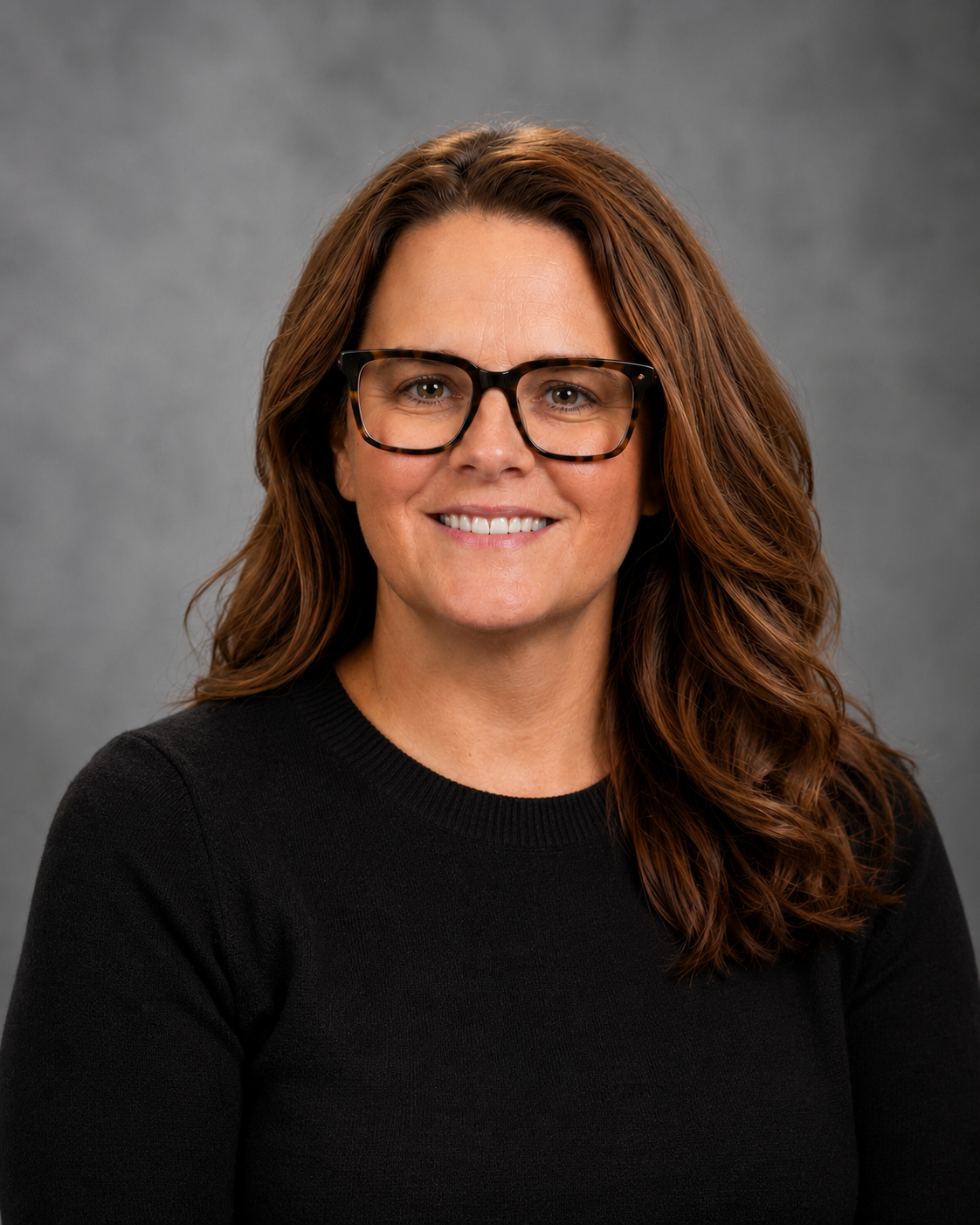 Currently: English teacher at Emmetsburg High School
Dissertation Title: Socioeconomic Status and Educational Opportunities Through the
Eyes of Students and Teachers: Diverse Realities, Shared Insights
Schany's research examined how students and teachers in rural schools perceive educational opportunity and equity, revealing both shared concerns and differing perspectives.
“One thing my dissertation highlighted is that educational opportunity in rural schools is a lot more complex than people sometimes assume. A lot of the conversation around equity in education focuses on urban or suburban schools, but rural schools have their own unique strengths and challenges. I found that students and teachers often viewed those challenges differently.
“Teachers tended to focus more on systemic issues like staffing shortages, limited funding or not having enough advanced coursework available. Students, though, talked more
about their lived experiences such as whether they felt supported by teachers, whether they felt prepared for college and whether some students had advantages because of family connections, reputation or social status in the community.
“Overall, I think the biggest lesson from the research was that equity in rural education is about much more than just funding or programs. It’s also about school culture, relationships, expectations, access to opportunities and making sure every student feels seen, valued and capable of success regardless of their background.”
Tiffiany Evans, EdD '25
 Currently: Teacher librarian in Waterloo Community School District
Dissertation Title: An African American Teacher Librarian’s Transformation with Culturally Diverse Literature in a K-5 School Library: An Autoethnography
Evans, one of the College of Education’s first Holmes Scholars, explored the role of culturally diverse literature in elementary school libraries while reflecting on her own growth as an educator and librarian.
“I decided to pursue an EdD as a personal goal of continuing learning and to hopefully inspire the students I work with to do so as well. I also felt it was important, as a woman of color, to provide representation for students and show them that there are no boundaries, regardless of what you look like or where you come from, when it comes to academics.
“I would describe my dissertation research as unique. Hopefully it contributes to the field of literacy and highlights the importance of children seeing representation through literature. My research helped me learn more about myself as a practicing librarian and what was important to me when curating curriculum and materials for the school library.
“Looking back, the process of writing a dissertation has given me the confidence to know that all things are possible and that, through my experiences in education, I have a voice that can impact the profession of teaching. The knowledge I gained through the dissertation process gave me the opportunity to look beyond the four walls of a classroom or library and explore research I probably would not have discovered had I not gone through an EdD program.”
John Jimo, EdD '25
 Currently: Faculty member at Emmaus University
Dissertation Title: Practice Makes Ready, Not Perfect: Exploring Pre-service Teachers’ Perceptions of their Pre-student Teaching Practicum Experiences
Jimo, the 2025 recipient of the David Bills Outstanding Dissertation Award by the Iowa Academy of Education, explored the lived experiences of nine pre-service teachers during a pre-student-teaching practicum, examining how their relationships, roles and sense of fit with cooperating teachers influenced their developing teacher identities and preparedness for student teaching.
“This research emphasizes the vital role mentor teachers play in preparing classroom-ready teachers and underscores the importance of the mentor-mentee relationship in promoting positive perceptions, experiences, and outcomes as pre-service teachers prepare for successful and rewarding careers in teaching.
“I think the most meaningful moment of guidance during the dissertation process was the committee's critical, constructive feedback after my proposal presentation. They felt that my initial theoretical framework did not align with my study’s purpose and research questions. Their recommendations led me to an incredibly relevant and helpful theoretical framework that grounded and strengthened my study.”